
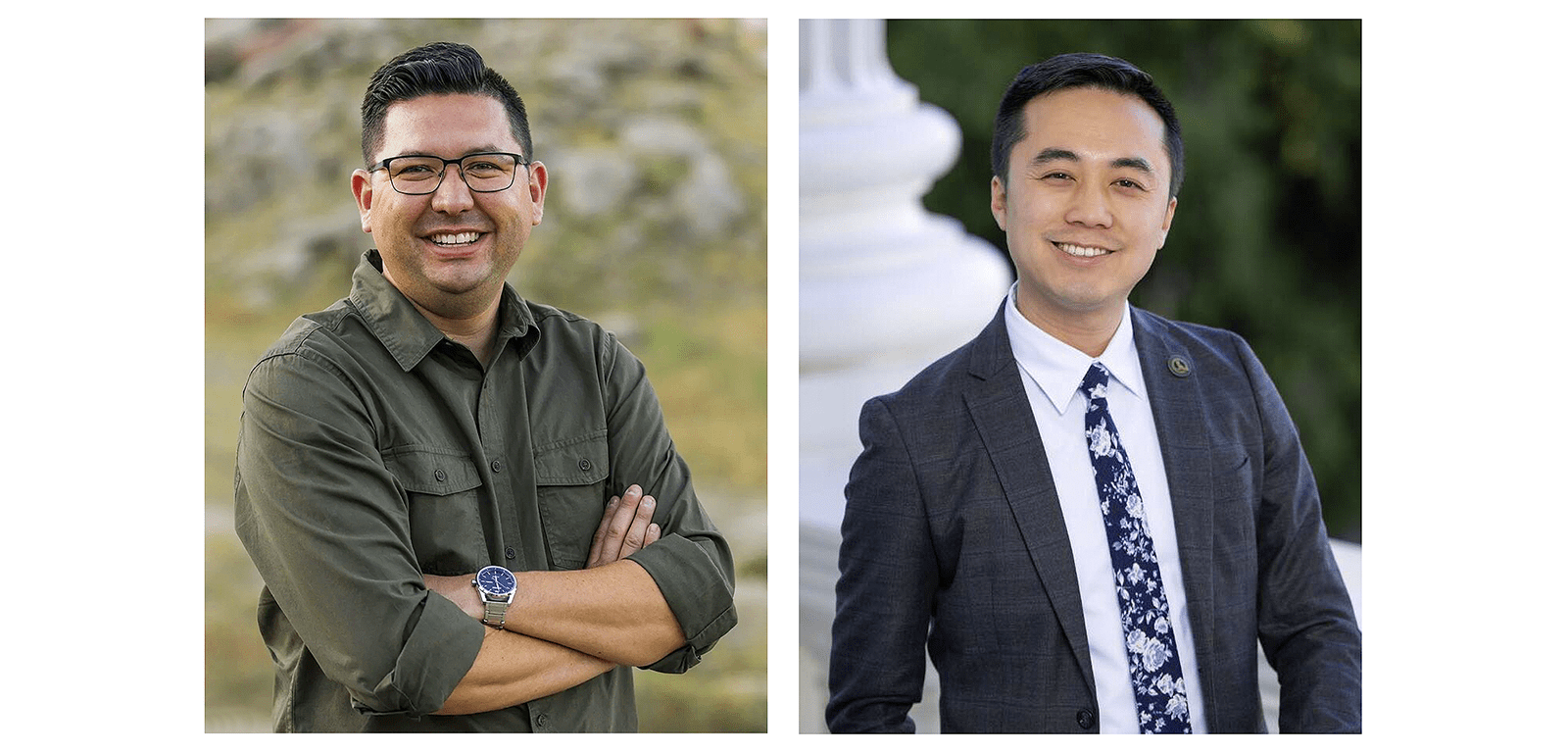
Above: Alex Lee (right) represents portions of Alameda and Santa Clara counties in California’s State Assembly. Lee, a Democratic Socialist, is sponsor of AB 1729, which would let California state agencies set their own telework policies. Josh Hoover (left) is a Republican and AB 1729 coauthor who represents portions of Sacramento County in the State Assembly.
By Erik Skindrud, InfoWise.org
California unions and elected officials are following a Texas playbook that undid last year’s return-to-office order in the Lone Star State — as Gov. Gavin Newsom charges ahead with his own unpopular RTO mandate.
Last June, Texas Gov. Greg Abbott signed House Bill 5196, essentially reversing Texas’ RTO order. Abbott didn’t comment after signing the bill.
On April 8, a California version, AB 1729, advanced — with the State Assembly Committee unanimously endorsing it.
A bipartisan coalition is backing the bill, which would let state agencies set telework policies for themselves. It would empower California Transportation Plan (CTP) 2050 action items, which recommend “expansion of telework policies for State employees and other public-sector employees who are able to work remotely.”
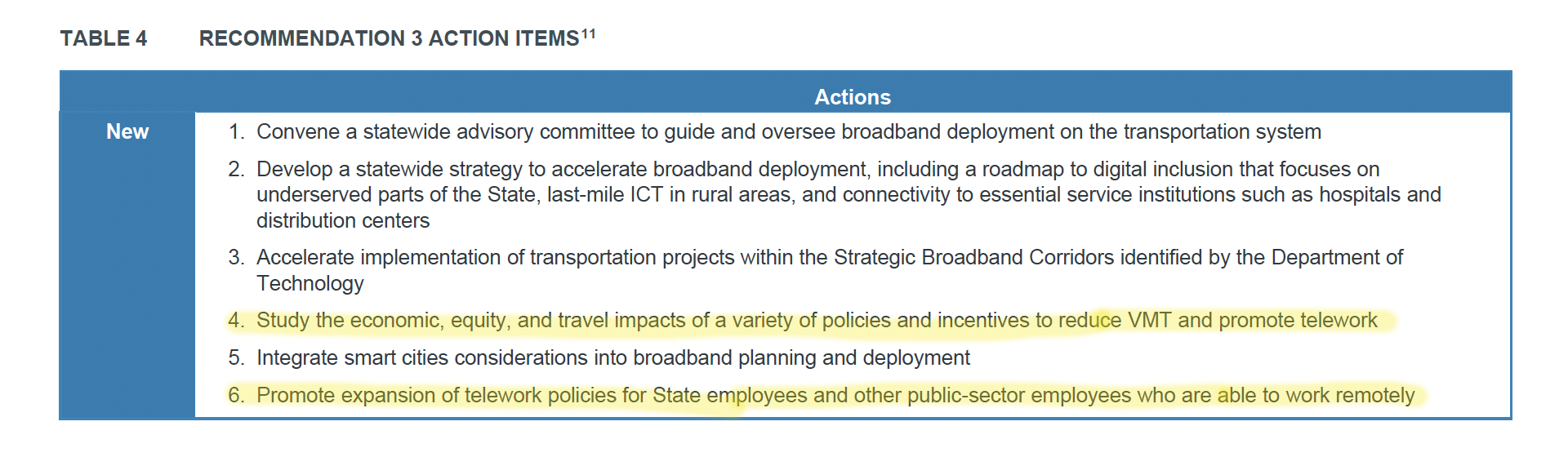
It would also establish a website publishing data on annual cost savings, reduced commutes, and cuts in energy use and emissions related to state worker telecommuting.
The effort is spearheaded by youthful state assembly members who see work-from-home as a progressive policy that delivers benefits to workers and the state’s bottom line. Late last year, the nonpartisan Legislative Analyst’s Office tallied California’s budget deficit at $18 billion. (The governor’s office in January downplayed the issue, pegging the deficit at $3 billion.)
On May 14, both will deliver a ‘May revise’ — new budget forecasts that include deficit estimates. This past week, columnist Dan Walters accused both Newsom and the state legislature of hiding their heads “(in) the sand” on budget imbalances that may add up to $30 to $60 billion a year.
Newsom is “standing on political quicksand” given the many unknowns in the budget, the L.A. Times said on May 3.
With looming pressures from the Iran war, these imbalances may push Newsom to relent on his in-office push — which would save taxpayers at least $225 million annually — and $1 billion every four years.
Newsom’s RTO is a departure from California’s half-century of pioneering and promoting telework. If his mandate sticks, California would step back from its role as world leader in the practice.
Consultant and blogger Gleb Tsipursky suggests the move is a policy feint designed to mollify commercial real estate and downtown business owners — before reversing course, satisfying worker and union demands.
The playbook unfolds in this order. Candidate Newsom “announces a sweeping return (to office in order to) placate landlords and transit agencies, then trades (telework) flexibility for delayed raises, trimmed stipends or slower pension growth.”
The playbook unfolds in this order. Candidate Newsom “announces a sweeping return (to office in order to) placate landlords and transit agencies, then trades (telework) flexibility for delayed raises, trimmed stipends or slower pension growth.”
“The Texas about-face isn’t an isolated incident,” Tsipursky observed last August. “It’s part of a fascinating pattern playing out in state capitals across America, where rigid return-to-office mandates are collapsing under the weight of economic reality and employee resistance.”
Another possibility is that Newsom would wield his veto.
“If the Legislature passes (AB 1729), there is one major hurdle: the governor’s desk,” the Sacramento Bee noted on April 8.
Telework — and AB 1729 — advocates hold a powerful card that could decide the poker match, however.
Nearly all bills vetoed by Gov. Gavin Newson pass by more than a two-thirds majority, “meaning the same votes from those legislators would be enough to override the governor’s veto,” media outlet CalMatters noted in 2024. Tradition and “loyalty” have prevented the step being taken since 1979.
With Newsom leaving Sacramento, and telework support across the aisle, the option is on the table.
“The bottom line is my boss represents thousands of state workers and is supportive of their desire to work efficiently and productively at home. That’s the reason he’s pushed against the Governor on this issue and opposes his RTO directive.”
Teresa Trujillo, Assemblymember Josh Hoover chief of staff
Assemblymember Lee, AB 1729’s sponsor, declined to provide comment for this article. His press release, with bill endorsements from five union leaders, is available here.
Late last year, however, Assemblymember Josh Hoover’s chief of staff shared perspective on Hoover’s support for telework — and the current two-days-in, three-from-home hybrid arrangement.
Hoover is the lone Republican among nine AB 1729 coauthors.
“The bottom line is that my boss represents thousands of state workers and is supportive of their desire to work efficiently and productively at home,” Hoover chief of staff Teresa Trujillo said via email. “That’s the reason he has pushed against the Governor on this issue and opposes his RTO directive.”
Erik Skindrud works a hybrid schedule in Downtown Los Angeles and his home office. @Erik_Bookman on X.
 InfoWise.org
One thought on “Texas win inspires a California telework strategy poised to bypass return-to-office order”