
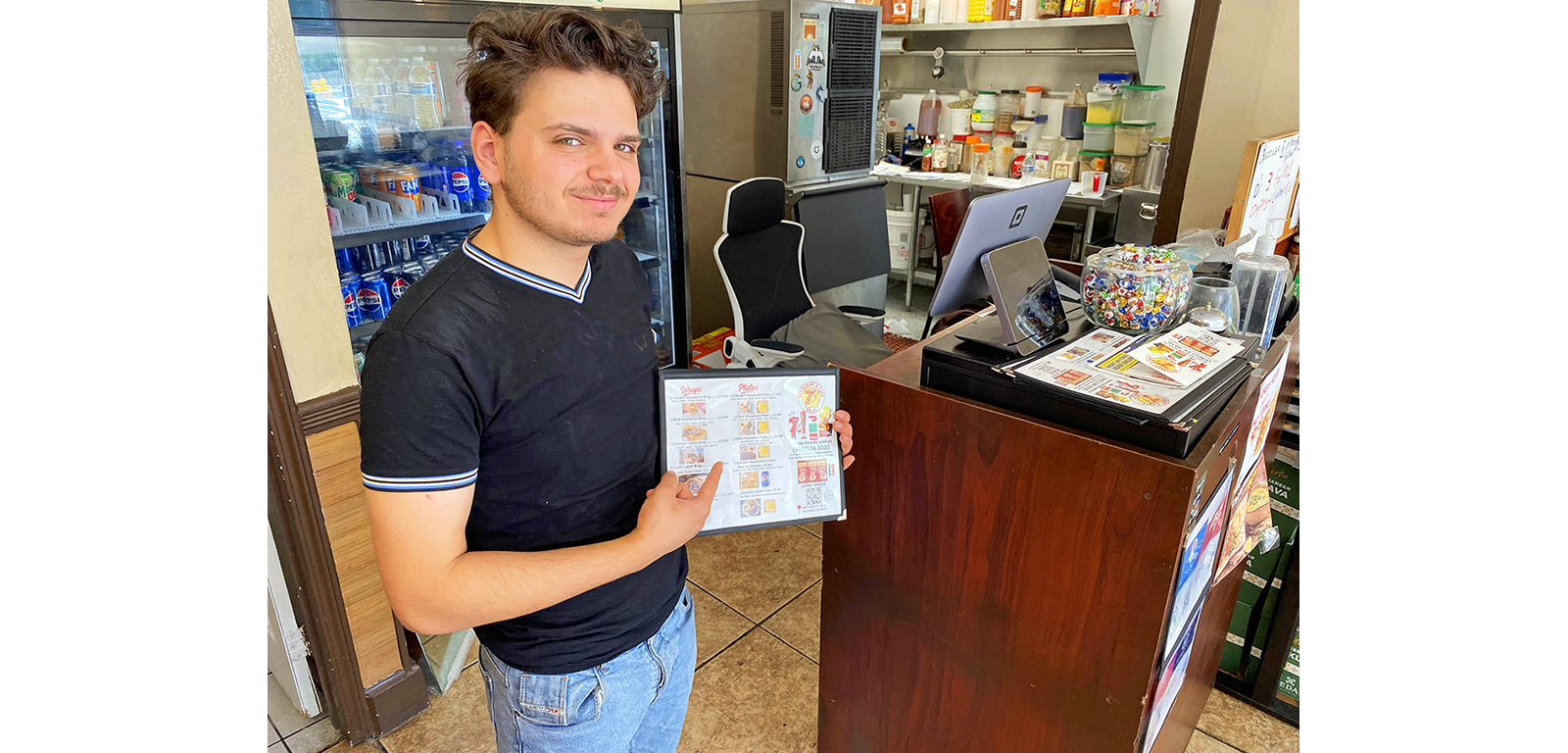
Above: Yousef Alzaidi of runs 7 Flag Halal Restaurant & Cafe at 107 W. 3rd St. in downtown Los Angeles. The restaurant is coming up short, however — and needs a formula to move forward.
By Erik Skindrud, InfoWise.org
There are no shortcuts to proper falafel — like 7 Flag Halal Restaurant Cafe serves in downtown Los Angeles. The chickpea balls require a brisk bath in sizzling oil. Properly-fried, they’re delightfully crisp on the outside, steaming inside.
Some fast-food joints pre-fry the balls, then nuke them in a microwave before serving. The result lacks the crisp shell good falafel delivers. But it saves money.
Supplying the fryer with oil, as falafel production requires every two days, costs $40 a pop, 7 Flag proprietor Yousef Alzaidi said recently. There have been a lot more expenses too, since the family launched the venture in October, he explains
“Life here is expensive,” said Alzaidi — originally from Amman, Jordan. “We have a lot of costs. We’re coming up $10,000 short each month.
Yousef sat down as a guest finished a falafel pita, adding numbers on his smartphone. Daily customers average 10 to 15 a day. Dollars per customer — $10 to $15. It adds up to about $300 a day and $9,000 a month. The total doesn’t come close to the $20,000 the family pays in rent and expenses each month. Launching the operation in October cost $400,000 — for refrigerators, kitchen gear, refurbishing, and assorted expenses
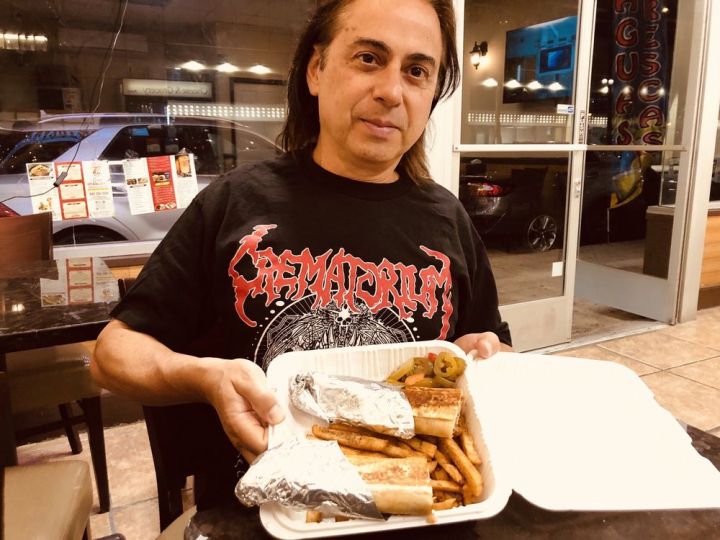
Above: An unidentified visitor posed with 7 Flag’s chicken shawarma combo in October. Photo via 7 Flag Halal Restaurant & Cafe’s Yelp page. The restaurant’s Instagram page can be visited here.
What 7 Flag needs now are customers — and fast. Yousef has passed out flyers. The neighborhood sits at the edge of Little Tokyo and the Toy District. They aren’t ‘mean streets,’ but they aren’t gentle either. Homelessness is a reality you can smell. Commercial real estate in downtown Los Angeles plummeted an average of 43 percent in value in 2023 alone. It could hemorrhage another $70 billion in value over the next decade, a 2025 study predicts.
That would hit the city and county with a $353 million in lost annual property tax revenue over the next decade, the same study predicts.
The Los Angeles Downtown business community does not mince words over the outlook.
“Civic workers, get your asses back in the office,” said Adam Daneshgar of Langdon Street Capital, owner of Los Angeles’ Grand Central Market. “We’ve got to bring them back.”
Voices like Daneshgar’s may motivate Gov. Gavin Newsom’s drive to push close to 100,000 state office workers into their Sacramento, Los Angeles, and other offices an additional two days a week later this year. The governor’s RTO push has met with stiff pushback from state workers and their unions, however.
Civic workers, get your asses back in the office! –Adam Daneshgar, Langdon Street Capital, owner of Los Angeles’ Grand Central Market.
For a moment, we might put speculation about political agendas aside and just wonder — might more workers savor food like 7 Flag’s and Grand Central Market’s if return-to-office succeeded instead of encountering endless objections?
That outcome is questionable. Yousef Alzaidi said he’s never seen a government worker in his establishment — before one walked over from the adjacent Caltrans building in February.
It’s also plain that restaurants are on the ropes given the country’s continuing cost crisis. Just look at the sad place Chipotle, Wahoos Fish Taco, Jack-in-the-Box and others now find themselves in.
On the other hand, hardworking families can still find California the Land of Opportunity. But can they find it in Downtown — outside the trendy Arts District?
“Eaters don’t want to waste their money on just OK food in this economy,” L.A. Times columnist Gustavo Arellano pointed out last month. “The coolest spots since the rise of social media are mom-and-pop regional eateries.”
Perhaps 7 Flag just needs a nudge and a notice to join the list.
Erik Skindrud works in a Downtown Los Angeles office two days a week. @Erik_Bookman on X.
 InfoWise.org