

Above: Kristie Overstreet holds a PhD in clinical sexology and is a board-certified sex therapist and transgender care therapist.
By Erik Skindrud, InfoWise.org
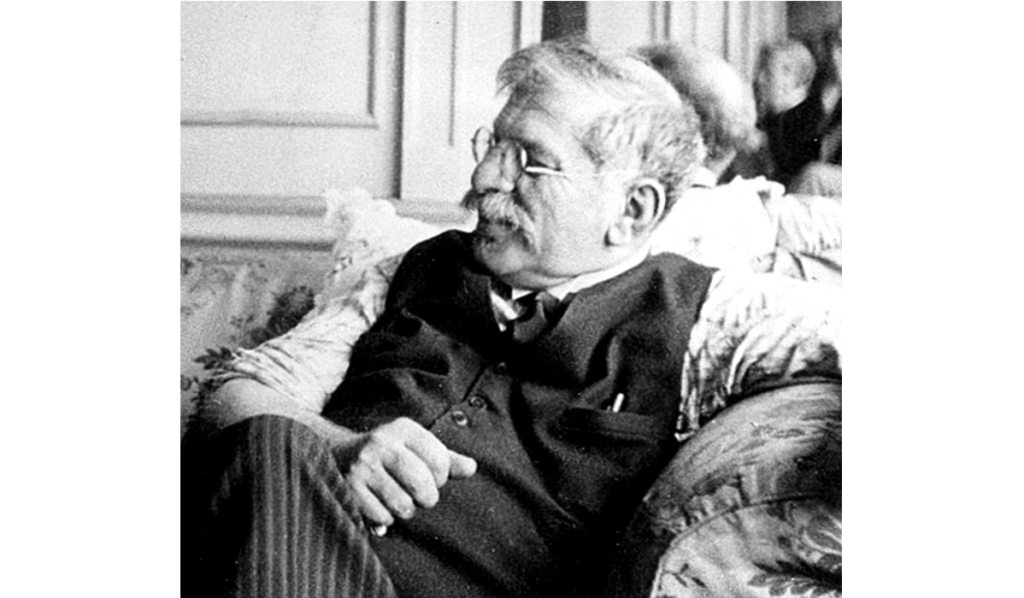
May 14 is the anniversary of Magnus Hirschfeld’s birth. It is also the date of his passing — in France in 1935. Hirschfeld, who called for acceptance of gay, lesbian and transgender people decades before any movement existed, died in exile two years after a Nazi mob looted his Institute for the Study of Sexual Sciences in Berlin.
Openly gay himself, Hirschfeld’s crusade for tolerance was sparked by a patient’s 1896 suicide — linked to disapproval over the man’s sexual identity.
Hirschfeld co-wrote the 1919 film Anders als die Andern (Different From the Others), a landmark cultural document now more than a century old.
“In Germany… legal discrimination against homosexuals continues unabated,” he says in the film. “May justice soon prevail over injustice in this area, science conquer superstition, love achieve victory over hatred!”
After a lengthy world tour, Hirschfeld was hailed as the “Einstein of Sex” by the Hearst newspapers.
Sexologists like Dr. Kristie Overstreet of St. Augustine Beach, Fla. continue Hirschfeld’s work, endeavoring to educate on the intricacies of human sexuality and gender — and the myriad ways both are expressed.
Work remains in teaching health professionals proper vocabulary for interacting with LGBTQIA+ people. Knowledge is required to sensitively communicate with this diverse group — and Overstreet is one of a growing number who instruct nurses, doctors and others in this area.
Multiple studies chart how implicit bias impacts people of color. The effects of insensitivity toward LGBTQIA+ people are less documented. According to survey results published in the journal Academic Medicine in 2015, however, close to half of all medical students express some degree of explicit bias toward gay and lesbian people, with close to 82 percent showing some signs of implicit bias toward the group.
A 2017 TED talk delivered in Livonia, Mich. offers a sample of Overstreet’s knowledge, empathy, and humor. She relates multiple “horror stories” about patient medical needs ignored by caregivers, fueling depression, anxiety, and substance abuse.
State and federal legislation do not consistently mandate care training for the LGBTQIA+ community. That’s a shame, as the volume of information — for transgender people alone — is considerable, and requires a commitment in time and resources. “Executive-level directors” need to take the lead, Overstreet says.
In the below interview, Overstreet explains the special needs of LGBTQIA+ people and the positive outcomes that follow specialized training for caregivers.
More on Overstreet’s Transgender Healthcare Dignity Model training is available here.
Fear plays a big role in the way transgender and other people are perceived by many professionals. What is most effective in overcoming missteps that impact this group?
It’s taken many years to develop an approach to help bring awareness, insight, and growth to people’s fear. I invite (healthcare professionals) to open their hearts and their minds to other humans. Approaching this as simply an invitation to hear and learn about other humans helps people become less rigid, with their walls up to things they’re not familiar with.
I tell people that I’m not here to change their views, minds, values, or any other things that make them… them. I just invite them to hear and learn about others who may be on a different path. Humanizing transgender, nonbinary, and genderqueer individuals helps many cisgender people open themselves up to learn more about what they might not understand.
“Doctors, nurses, and other healthcare providers as a whole receive very limited training.”
–Kristie Overstreet, PhD
Cultures have widely varying attitudes toward the gender continuum. In our own country, attitudes vary considerably between urban and rural areas, for example. How do you see this dichotomy in America — and how is it evolving?
I’m proud to have grown up in rural south Georgia. It was there that I learned firsthand about empathy, kindness, and serving others.
LGBTQIA+ individuals have been here since the beginning of time — but did not have the ability to be visible due to discrimination, lack of acceptance, fear of violence, unaccepting families, and a society that told them to stay hidden. Thanks to the increased visibility of LGBTQIA+ individuals on TV, in movies, and across social media, people are learning more and fearing less. If you asked the person next to you in line at the store if they know someone or have met someone who is in the LGBTQIA+ community they would say yes. This wasn’t the case 10 years ago, so it’s every individual that has risked being themselves in public, has come out, has shared their story, or lived their authentic life that has helped change people’s attitudes toward the gender continuum.
In your 2017 TED talk, you mention that most doctors probably receive just a few hours of coursework on how to deliver appropriate care to transgender people. Is there any state or federal legislation in the works to upgrade requirements in this area?
Doctors, nurses, and other healthcare providers as a whole receive very limited training. Some may attend workshops, trainings, and received continuing education credit after their programs, but most have only a few hours of coursework under their belts.
Some states, as with California’s Department of Health, require certain facilities and organizations that receive state and federal funds to ensure staff are trained in LGBTQIA+ competencies. I’m not aware of any state, local or federal legislation in the works to set wider requirements. Currently, the responsibility of ensuring competent care is on the individual providers. There are many healthcare organizations, however, that see the need to ensure this care, so they are requiring training for all staff.
My recommendation is that any organization that provides any form of health/wellness care ensure that every staff person receive training to ensure confident and competent LGBTQIA+ care.

Commitment to training like your Dignity Model program must vary considerably by facility and health system. As we all know, some evangelical and Catholic-affiliated hospitals and systems limit the services they provide to women. Are some organizations also resistant to delivering appropriate care to transgender people?
It really depends on the individual organization’s commitment to inclusive, affirming, and competent care. I’ve heard experiences from patients at all types of hospitals receiving horrific care including inappropriate questions that have nothing to do with why they are seeking care, refusal to care for them, and labeling them with mental health disorders even though the criteria don’t support it.
A big issue is a disconnect between executive-level directors identifying the needs and the difference in the needs that the front-life patient-facing staff identify.
How is America’s health landscape evolving for transgender people and others who face similar challenges? Should we be alarmed — or optimistic?
We need to be optimistic because there are more people like me who are allies, educators, and supporters of people being their authentic true selves rather than people who are full of hate for others that are different than them. With the increased visibility of the number of people coming out as themselves, plus their support systems, and we as allies will continue to work until health equality is a reality.
 InfoWise.org